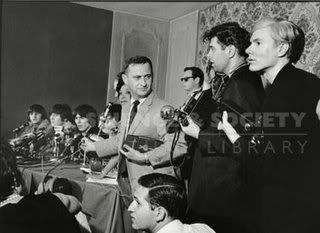
The National Film Theater Summer 1966 season.
Every ten years since 1952, Sight and Sound Film Magazine has asked a selection of international film makers and critics to compile lists of what, in their opinions, are the ten greatest films of all time. These lists serve as ballots for the supposedly authoritative top ten list that the magazine publishes. It is Citizen Kane‘s chart-topping dominance on this survey since 1962 that, I believe, has lead to its reputation as The Greatest Film Of All Time. Kane didn’t even crack the top ten in 1952. It fell into the runners up catagory with the dubious likes of Chaplin’s Verdoux.

In addition to publishing the “winners” list, the magazine also prints all of the ballots, which usually make for more interesting reading than top ten. Often, the compilers cannot resist writing a short note either apologizing to films or directors excluded or explaining that had they been asked another day, they’d have compiled a completely different set of films. Here are the ten films that were blowing up Lotte Eisner’s skirt in 1962 and her brief note explaining why she chose what she did (she was still carrying a torch for Verdoux!).

Fast forward ten years and Peter Bogdanovich, whose films I quite like up to and including the great They All Laughed (which ranked on Tarantino’s 2002 Sight and Sound poll), is asked to weigh in. Along with his top ten films, he added what is without a doubt the most pretentious note in the fifty years of the poll.
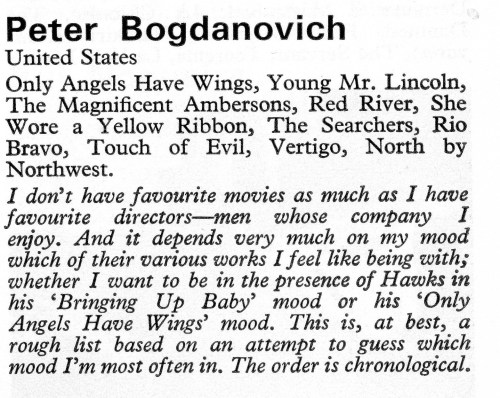
Bogdanovich must have thought that that sounded pretty good because he made virtually the same remarks four decades later when AFI made the mistake of asking him what his favorite film is.
Posted in cinema, context, dig the critics
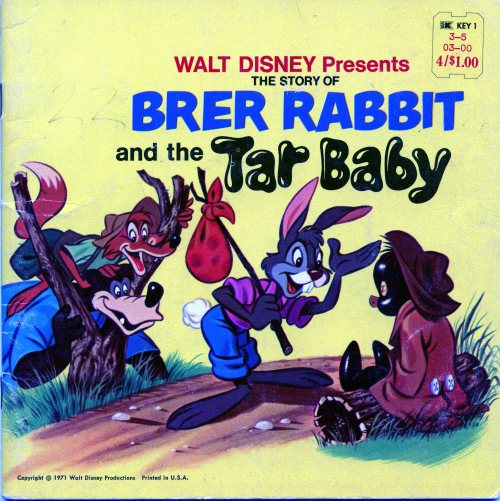
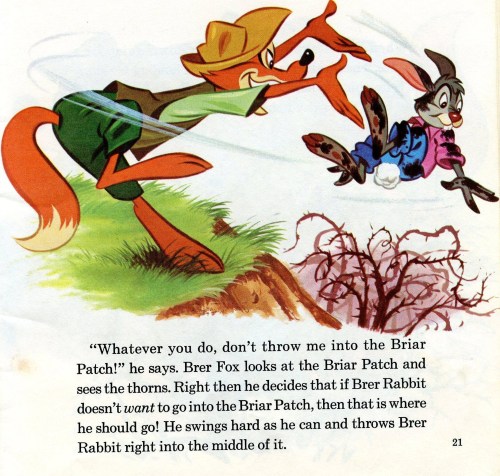
From the deepest recesses of my book shelf, I bring you some scans of a book that caused me deep confusion as a child. This was almost certainly a hand-me-down from my older siblings. Can you believe that my parents even let me have this? Anyway, below are pages from a storybook based on a segment of the now nearly disowned 1946 Disney feature Song of the South. Those faint twos on the left of the title I think are evidence that I was practicing my penmanship.
The story goes like this, Brer Fox and Brer Bear want to eat Brer Rabbit but he is too fast for them to catch. As anyone in their situation would, they build themselves a “tar baby”–as the name suggests, that’s a baby made of tar–and set it along side a path upon which Brer Rabbit travels.
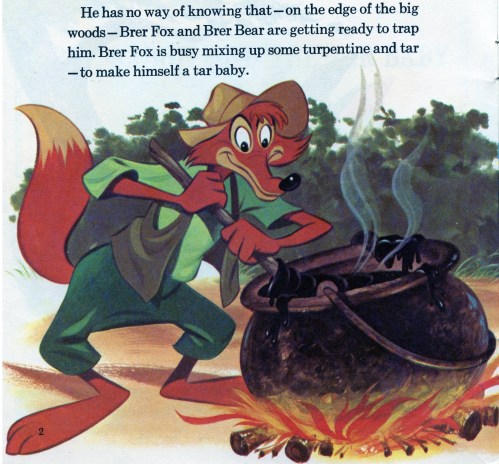

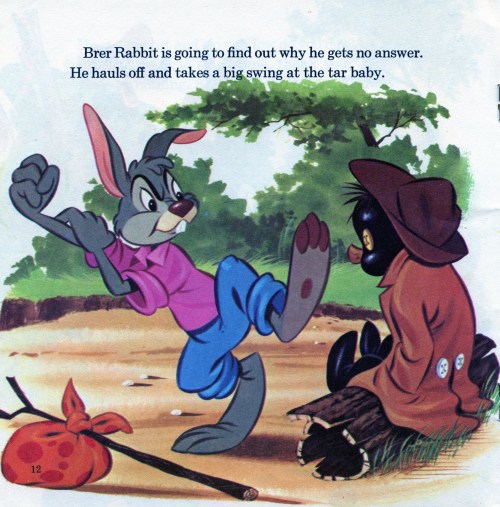
Brer Rabbit comes bounding down the path and offers a friendly hello to the tar baby who says nothing in return. Keep in mind that the tar baby is really just a lump of tar with a hat and coat on. The book assures us that Brer Rabbit it a pretty bright fellow but he doesn’t see through this obvious trap. Brer Rabbit, disgusted with the tar baby’s insubordination, gets aggressive and roughs up the tar baby succeeding only in getting himself caught in the tar from which he is unable to free himself.

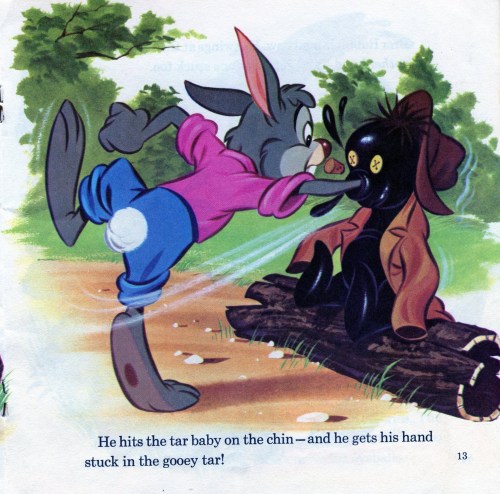
Below you can see the exact moment when Brer Rabbit realizes he’s been duped.
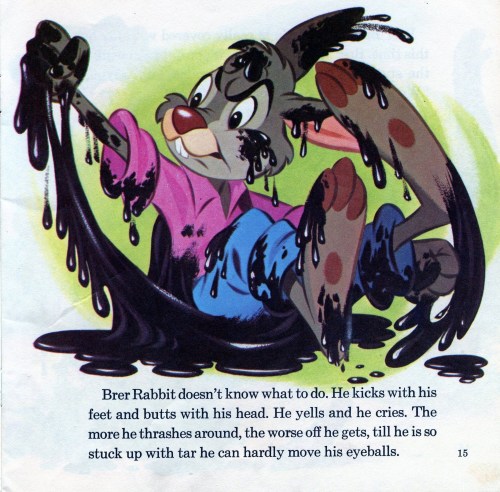
As the fox and bear close in, Brer Rabbit uses a little reverse psychology on his predators and totally changes the subject (the subject up until this point is that he’s covered in tar and is about to be roasted and eaten) by begging not to be thrown into a nearby briar patch. The fox can’t resist doing the exact opposite of what the rabbit says regardless of the fact that a few moments earlier he and the bear had been building a fire to roast the rabbit over. Brer Rabbit has the last laugh though, the briar patch is the place of the rabbit’s birth and he feels at home there. Conveniently, briars are apparently harmful to both bears and foxes but not to rabbits. It is never explained how he got the tar off of himself or how the fox and bear planned on extracting the rabbit from the briar patch if the impact killed the rabbit.
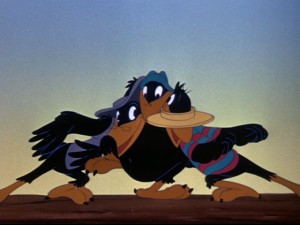
I figure that it is probably for the best that the Disney company keep this one in their vault, but, to their credit, they haven’t edit it out of their official history the way that they have some things. Bootleggers keep the film available (look at this pathetic website–there’s nothing official looking about it) and I was able to find this ridiculously thorough history and memorabilia website. While digging up information on Song of the South, I began thinking of that scene in Dumbo with the singing crows. I figured for sure that that business surely wouldn’t fly in this day and age but it seems as though Dumbo was released on DVD as recently as 2006.
Posted in cinema, context, racist garbage
The tape picks up again after lunch. Much of the next hour or so is devoted to extremely lengthy instrumental improvisations. When the jamming begins it seems as though the fabs are going to work on George’s “For You Blue” because they are on the appropriate instruments (Paul on piano, Ringo on drums, George on guitar, Billy on organ and Lennon on slide guitar) and Lennon plays a bit of the song’s intro. An thorough work out of “For You Blue,” far from my favorite song that the fabs endlessly rehearsed during these sessions, would have come as a welcome substitute for the uninspired noodling that the band engage in. The Beatles, as it turns out, aren’t the strongest “jam band” out there. While this instrumental goes on and on, Yoko can occasionally be heard very faintly doing that caterwauling shit that she does but thankfully it seems as though she is singing into a microphone that is switched off. No one in the control room bothers to tell her that the mic is off.
After the jamming ends, Paul seems to want to work on “Let It Be” some more but after five renditions, none any better or worse than the ones that they had done before lunch, the band decide to give that one a rest chiefly because Lennon wants to “give up singing [the harmonies] for a bit.” Heather uses this down time to cease the microphone and imitate Yoko’s vocal approach to Lennon’s amusement. Before the band can decide what song they’ll play next, there is more jamming. This time Harrison takes vocal duties and extemporizes typically grouchy lyrics (“I told you before not to come knockin'”) to another bluesy instrumental. Heather occasionally joins in with some moaning. This goes on for twenty-five minutes.
Finally, the fabs get back to serious business. Paul begins to play the opening of his “The Long and Winding Road” and this signals a transition back into rehearsal mode. John, again on bass, is still largely unfamiliar with the song. “What key is it in?” He asks. “E flat! Fucking hell, you must be mental.” Even though it is quite late into the sessions, this is the first occasion that the band devote much time to rehearsing this song. Up until this point, it had only been played by Paul alone, usually on days when he was the first to arrive at the studio.
There is a moment of debate as to whether the fabs should even bother recording this song at all as it seems to be something that needs a string quartet, which might require overdubs–something that the band had swore off when beginning these sessions. Paul is of the opinion that the song should really be given to Ray Charles. Despite this, the band work on the song for the next two hours.
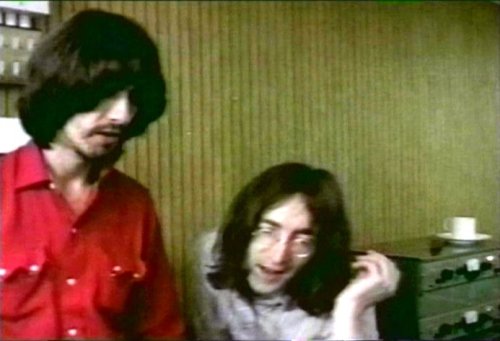
The band make short work of getting familiar with the song and, like “Let It Be,” come reasonably close to nailing it but, also like “Let It Be,” they would not record the version used on the LP until the last day of the sessions. In the mean time, Macca and Lennon amuse themselves by imitating the announcers of some televised ballroom dancing program (“Rita and Thomas Williams…He’s wearing a dark beard and a sombrero…Her husband is wearing a crinoline skirt which he made himself.”)
“The Long and Winding Road” is another song from these sessions that has never been a favorite of mine, but it works a lot better here in the almost lounge-y arrangement that the fabs give it rather than with all of the shit that Spector hung on it (some of these rehearsals have the feel of Air’s “Playground Love“). The fabs weren’t treating it as a powerful enough song to require all of Spector’s bells and whistles. Despite repeating many times that he hates Spector’s mix of the song–even going so far as to name its corruption in the lawsuit that dissolved the band (Macca is so fucking awesome!)–Paul plays it in the Spector arrangement to this day in concert.

As the day comes to an end, the fabs and their producers pile into the control room for playbacks of the material they just recorded. Georges Martin and Harrison and Paul discuss the arrangement of “The Long and Winding Road” while Heather proposes marriage to Glyn whom she calls Mr. Sock while asking him to pull off her socks. She then kills him and then brings him back to life (“I see you’ve been dead and I’m the queen…”). There is still some question as to how to handle playing “The Long and Winding Road” live without overdubs. George Martin asks if he should book The Mike Sammes Singers, a white bread vocal group upon whose services the fabs occasionally call when they need some extra voices. That’s them singing “stick it up your jumper” and “everybody’s got one” at the end of “I Am The Walrus,” they’re also on “Good Night” and all over Paul’s Thrillington album. They never appear during these sessions but someone calls them in for postproduction. Paul abruptly announces that he and Linda are going home to put Heather “back in [her] box.” Heather will not be returning the next day because she has school. With the day’s work behind him, George Martin decides to have a drink–there is plenty of booze around.
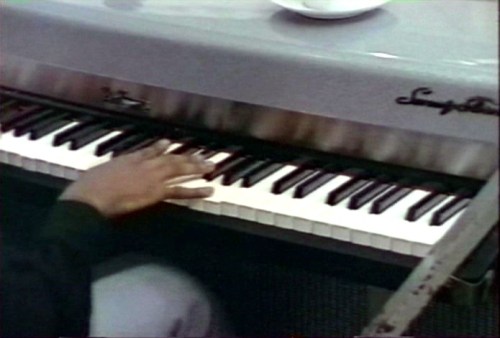
The last bit of the tape features Harrison having a conversation with the seldom miked Billy Preston. They seem to be discussing plans to record a Billy album. He was signed to Apple a few days earlier. George tries to think of who is free to record some songs with Billy. He suggests Ringo (if he can squeeze it in with his work on Magic Christian) and Paul. Lennon isn’t mentioned. The very last thing on the day’s tape is Harrison explaining to Preston that he has to “go into hospital” after the Get Back sessions for some dental surgery. “You see I’ve got a tooth–and it’s a bad one…and they have to cut through the gum and scrape out all this shit and it’s very bloody…” and there the tape ends.

That’s the end of the Get Back sessions posts for now. Maybe I’ll do more someday. I also plan on doing a post or two on Paul’s 1980 arrest in Japan and maybe some other fab-related things.
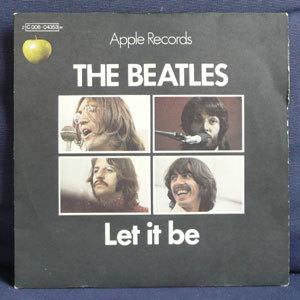
Some person on ebay has listed a number of early-ish Apple Records 45 releases from France. The covers of these 45s are all pretty interesting. Let’s have a look.
The French “Get Back” sleeve leaves a bit to be desired.
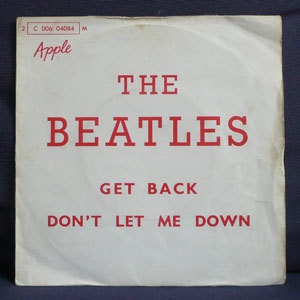
The same goes for “The Long and Winding Road.”

“The Ballad of John and Yoko” looks pretty good.

The “Let It Be” is the same as the one in the States–pretty boring.
This Ringo single is fantastic-looking.

I’ve posted this cover before but it is hot enough to warrant a second look.

While I was looking at these I noticed that some dirtbag was trying to sell an ad clipped from an old issue of Cash Box for $20.00. The ad is pretty great though.

Also, some Beatles photo blog that I follow recently published this gem. My goodness, I’d do anything to own this. It’s almost upsetting to me that I don’t have this.

UPDATE: That ad sold for $66.00.
Posted in apple records, context, Macca, music, on your sleeve, years after the event

The fabs are now in rehearsal mode. They are on their “Let It Be” instruments: Paul on piano, George on guitar, Ringo on drums and Billy on organ. This leaves John on bass duties, a role he hardly relishes. He complains to Paul that he “can’t get a neat sound out of it–so that the fat string doesn’t go ‘ppffft.'” Paul coaches him with, as always, an example from their prior recording history, “Bass is, uh, if you get into it a bit like guitar but fatter. That’s another way: play high, don’t play fat–another style altogether, like “Rain,” you know, I did that.”

Feeling he has properly placated John, Paul is almost ready to get into “Let It Be,” but not until after a brief detour through The Killer’s songbook. They also do a fantastic “Don’t Let the Sun Catch You Crying.” Not that one, but a song that Ray Charles recorded. While Paul messes around some more, George tells John of an interview he had read the night before with Wilson Pickett, where Pickett said that ‘”Hey Jude” is “the most beautiful song he’s ever heard.” While he gets no argument from me on that one, Pickett hasn’t heard “Let It Be” yet. The fabs seem accustom to this sort of praise and launch right into the first “Let It Be” of the day. Nearly thirty will follow.
During a break between run throughs of “Let It Be,” it becomes apparent that George is looking at some kind of girlie magazine (“look at her.”). John feels that Apple should publish its own girlie magazine filled with photos of Apple blonds. He then asks if anyone has heard of the American group called The Motherfuckers (“they’re never going to get into Billboard.”). Lennon is only half correct here, there was a group called The Motherfuckers, but they were a political activist group and not a musical act. John’s idea of a band called The Motherfuckers causes Paul to launch into one of his earliest compositions, a schmaltzy ditty drenched in “show biz” entitled “Suicide.” This song also has a Sinatra connection. Paul offered it to Sinatra a few years earlier and Sinatra rejected it saying, “The guy’s out of his fucking mind. I wouldn’t sing that on my crapper.” George and John join in on “Suicide.” The fabs never recorded the song properly but Paul thought enough of it to include a snippet of it (between “Hot as Sun,” another early Macca composition that makes an appearance during these sessions, and “Junk”) on his first solo LP.
After several renditions of “Let It Be,” during which they get increasingly close to nailing it except for a few minor issues, George takes it upon himself to finalize the arrangement telling the others when their solos come in, how many verses come between choruses and so forth. He observes that the song is “very country and western.” Lennon corrects him, “country and gospel.” Throughout these Get Back tapes, George is heard more than once making arrangement decisions on Lennon/McCartney songs. It’s getting near lunch time and it seems as though everyone wants to eat. Paul tells them that they’ll “do it…twice more and have a ten minute ‘put your feet up, lads.'” Between the two takes, John comes up with this inspired bit of nonsense:
Directly after this, the fabs pull off one of their more impressive feats of the day, an extended jam that eventually got the title “Dig It.” Anyone familiar with the finished Let It Be LP has heard the forty-nine seconds of this included there. Including it in such a truncated form is one of the more bizarre decisions that Spector made when compiling that record. In fact the version of the song that that short segment was extracted from runs a full fifteen minutes long; incorporates elements of Dylan’s “Like a Rolling Stone” and the Isley Brothers’ “Twist and Shout;” and features the vocal stylings of six-year-old Heather whose screeching is at times oddly similar to Yoko’s. After seven minutes, Heather, who mostly moans and sings the words “bang, bang, bang” entirely too close to the microphone, loses interest (or is overcome by a need to dance) and it is at that point where the song picks up in the film. Don’t miss George Martin on that shaker.
Heather rocks pretty hard, not surprising when one considers that she would be an eventual follower of Echo and the Bunnymen (the other fab four from Liverpool):

While the band wait for lunch to be served, they kill some time running through a decent amount of Little Richard’s catalog and various other “oldies.” They play good to awful versions of Little Richard’s Rip It Up and Miss Ann, plus Kansas City, Shake, Rattle and Roll, Lawdy Miss Clawdy, Blues Suede Shoes, Tracks of My Tears and this glorious mess of You’ve Really Got A Hold On Me:
Upon completion of these sessions, there was talk of there being a second record, one of rock and roll oldies, emerging from the hundreds of hours of recordings, but the quality of the oldies performed throughout the month varies wildly, with most being marred by the band’s (especially Lennon’s) inability to remember song lyrics. Out of the oldies played on this day, some eventually made it onto Anthology Three but those tracks were infuriatingly edited and polished.
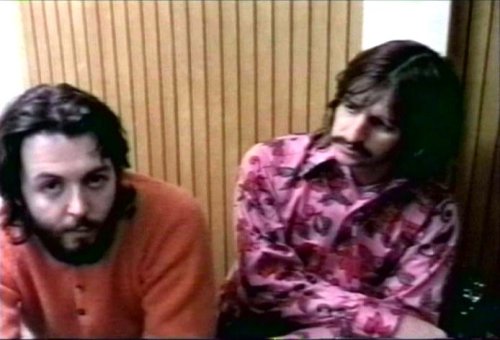
Seeing as how three people were kind enough to compliment me on earlier installments of this feature, here is the sequel. I am picking up almost two weeks after the thirteenth of January, which was arguably the least productive day of the entire Get Back project. (Well, the fourteenth might edge out the thirteenth–little outside of “Watching Rainbows” happened on that day.) Since we left off, George has agreed to come back to work provided the rehearsal sessions take place at Apple instead of the Twickenham film studios; the fabs have gotten a bit more serious about their rehearsals and have been joined by keyboard player Billy Preston, who was invited to work on the sessions by Harrison.
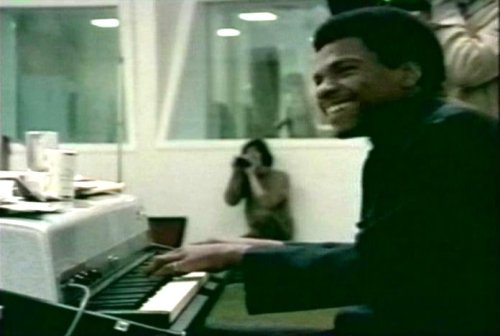
The day begins with only Ringo and Georges Harrison and Martin present. Harrison takes advantage of the absence of the groups’ two principle songwriters to try out some of the material he has been squirreling away for the past few years. He introduces his “Isn’t It a Pity” by explaining that he had written the song “about three years ago and I…sung it to John and he said, ‘that’s too much like fuckin…’ you know. Anyway, but I thought it was good.” He goes on to explain that while “in L.A.,” a friend who had some association with Reprise Records asked George if he’s “got a song for Sinatra.” George thought to himself, “that’s nice, fancy him wanting one of my songs.” But then he thought about what “horseshit” the by-then way past-his-prime Sinatra was accustomed to recording, and decided “fuck that, I’m not letting him sing it. He just learns it and he comes in and the band has learned it and just walks in and does it in, like, two takes and that’s it…because there’s nothing more that he’s going to do with it even if he does ten takes.” After playing a lovely “Isn’t It a Pity,” he describes his never-released song, “Window, Window,” as an “Irish or Scottish reel or jig or something like that.”

Before playing “Let It Down,” George remarks that he wishes that he could “come in here and feel the way you feel when you’re leaving, because there’s not too much difference except I was over there [yesterday] and I had the brown trousers on…it’s exactly the same: same songs, same ciggy.” George smokes Kents by the way.
Next George asks Ringo if he has written any more words to any of the songs he’s in the process of writing. At this point Ringo has only one full song under his belt, “Don’t Pass Me By” from the previous year’s self-titled LP. That song had a four year gestation period–it was first mentioned, and dismissed by the other fabs, in a 1964 BBC broadcast. In these sessions, Ringo has played two songs-in-progress on the piano for his bandmates, one is called “Pablo Picasso” and the other “Takin’ a Trip to Carolina.” While Ringo’s composition skills are minimal when compared to his absurdly talented bandmates, he has never been without his share of fans: Harrison has already reported that “Don’t Pass Me By” was Dylan and The Band’s favorite track off of the white album. On this morning, instead of messing around with “Picasso” or “Carolina,” Ringo plays for George a new song, one that had gone unnoticed by John and Paul when he debuted it for them three days earlier. He calls it “the octopus one.” Ringo plays what he has so far of “Octopus’s Garden”–the tune and some of the lyrics to the first verse–and the others react with enthusiasm that was missing when Ringo performed the song for John and Paul. Immediately all assembled get to work on fleshing out the song with Harrison contributing more than the eventual songwriting credit would suggest.

The song is worked on for nearly an hour during which time the Lennons and Paul, Linda and Heather arrive. John goes straight behind the drum kit and thrashes about. George and Ringo crack one another up by changing the chorus’ lyric to “octopussy’s garden.” Some of this can be seen in the “Let It Be” film (unfortunately, the better of the two clips of this available on youtube doesn’t allow embedding but can be seen here <–this clip gives us a better look at the amazing outfit that Heather was dressed in that day than the one below does.)
Paul comes in asking the others what they thought of "the dubs"–recordings of the songs they’ve been working on that each went home with the night before–Ringo listened to them and deemed them "terrible," George agrees and Lennon admits to having "left [his] in the car." Paul meanwhile thinks that the dubs are evidence that The Beatles are "the greatest band ever." He’s correct there. Lennon changes the subject by bizarrely asking Paul, "Hey, did you dream about me last night?" Paul doesn’t remember his dreams. Lennon had a "very strong dream–we were both terrified! Different dreams but you must have been there. I was touching you." Paul does his best to ignore this as everyone goes back into "Octopus’s Garden." Lennon works in a bit of Donnie Elbert’s "Little Piece of Leather,” which, up until a minute ago, I though he had made up on the spot. It’s not an improvised Lennon original as I had thought, but an old R&B tune. A bit of back story is given by Ringo with support from George on what exactly an octopus’s garden is. As Harrison explains, it turns out that “octopuses pick up all the seashells, do you know about that? They collect all nice-looking things and make a garden around where they are just with all the groovy things they find.

As work on “Octopus’s Garden” winds down, Heather becomes increasingly vocal. First she announces that her cat has had kittens (Lennon inquires if she plans on eating them, “lots of people do. You put pastry ’round them and have cat pie.”) and then launches into extended impressions of alternately “a pussy cat who was just born” and “a tame tiger” (“if I wasn’t tame I might scratch you. And I might eat you but I’m too tame to.”) After a bit of this she excuses herself saying she’s going “next door.” Paul tells her she can go anywhere she pleases so long as she doesn’t “interfere with anyone.”
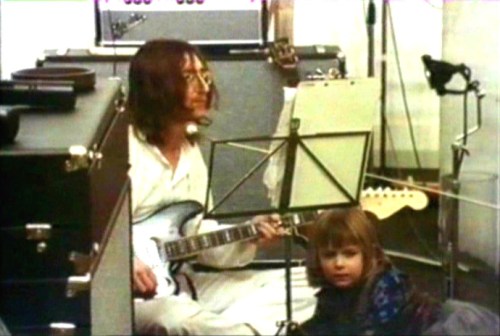
She picked a good time to leave as the fabs, Glyn and George Martin are getting in to the tedious business of listening to several “playbacks” of the previous day’s work. These playbacks are possibly the most frustrating parts of these Get Back tapes–just as you begin to think that you can’t bear to listen to another mediocre take of, say, “Dig A Pony,” the band retires to the control room to rewind the tape and listen to whatever it is they’ve just recorded–now you’re not only listening to the same mediocre takes of “Dig A Pony” again, but you’re listening to them with the fabs talking over them and you can barely make out what is being said.
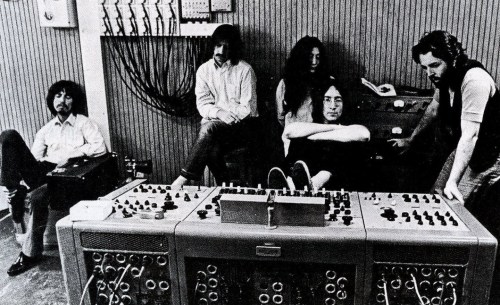
On this morning the band is listening to several renditions of “For You Blue” that they had recorded the day before. It takes some time for Glyn to find the take of “For You Blue” that they are looking for and then there is debate as to whether it’s the “good” one or not. Thankfully, the tame tiger returns to liven things up with more talk of kittens and band aids and chap stick. This kitten talk causes Lennon to observe that “they always make cat food tins too small.” Paul and Linda insist that canned food “isn’t any good for them.” George says his cats “really dig turkey and rabbit…fish too.” John also likes to give his cats ping pong balls to play with. Heather and Ringo list the various animals that jump. The fabs then listen to two different takes of “Let It Be” from the day before. The song still needs a lot of work.
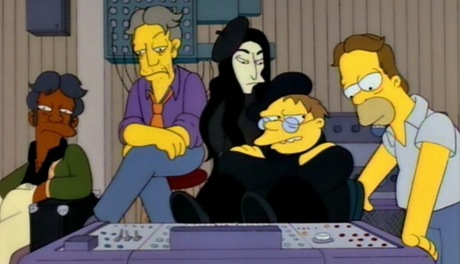
It looks like the French version of The Office uses the same scripts as the BBC version.
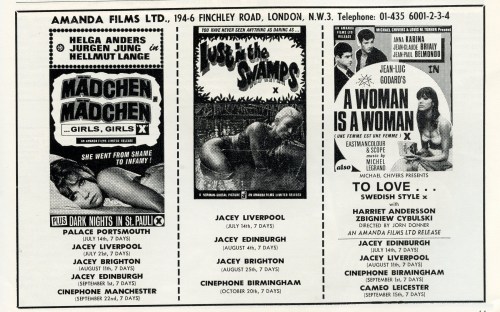
This is an interesting ad in that it looks like an exhibitor is attempting to pass off Jean-Luc Godard’s Une femme est une femme as something a little (or a lot) more smutty than it is. I imagine that more than one ticket buyer walked away disappointed.
Posted in advertising, cinema, context

The discussion is still on the problems within the Beatles as Paul presents an amazing idea of how to end their current project. The plan so far was to film a documentary of the fabs rehearsing for a television concert that would be recorded and released as a live album of all new material. Some debate remains on how exactly the film and television special would be filmed and edited.
A few nights ago, Paul and Neil came up with what might have been the perfect ending to the television special which ultimately was canceled altogether in favor of only a documentary and LP. Paul suggests that while the Beatles were rehearsing for the TV show, they should have along side them, “say, the editor of The Daily Mirror [or] someone as good as him–a real hard news nut– rehearsing a team of really hard incredible news men with films, writing, so and so and so and so, so that, on the night of the show, in between all of [The Beatles’] songs is news, but the fastest and hottest from every corner of the earth… ‘We’ve just heard that there’s been an earthquake in so and so.’ Just, like, incredible news in between each [song] so that it’s like a red hot news program and at the end, the final bulletin is that The Beatles have broken up.” The others like the idea but not the ending as no one present wants to see the end of the fabs.
There is a little more talk about what is to be done with Yoko as Michael suggests that one way to get John away from Yoko would be to “drug her herb tea or something and put her away for a minute or two.” No one seems too amused by this. He goes on to refer to Yoko as the “yellow peril” and suggests that things might be better if she were to stay in the black bag.
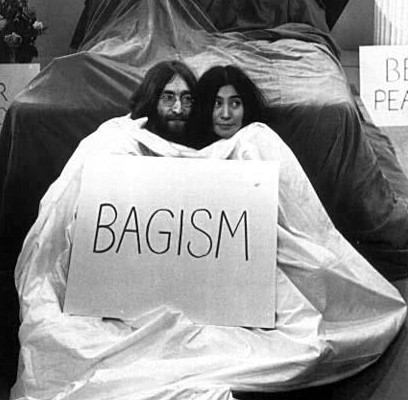
Someone has been sent to ring John and conversation slows as everyone apparently waits to see if John is going to turn up or not. Paul breaks the silence saying, “And then there were two.” Ringo responds with “Tom and Jerry.” Causing Michael to say “Simon and Garfunkel.” To which Ringo replies “I know. I said it because you told me.” Linda asks what they are talking about and Ringo relates the story Michael told earlier about Simon and Garfunkel’s earlier teenage incarnation. Linda is not only aware of this but also sings a bit of Tom and Jerry’s 1957 hit “Hey Schoolgirl” and compares the sound of their records to Jan and Dean. So it turns out that Ringo wasn’t far off when he said they were surfers. I stand corrected. They were a lot of things.
Michael is next concerned with where the band’s lack of productivity leaves the status of the film and concert. It seems as though up until George’s departure, everyone was under the misguided notion that the concert might occur as early as the eighteenth. There is no definite answer given to Michael’s inquiry. This leads to a very lenghty and somewhat tedious discussion about what exactly the look of the film and television special would be. Paul envisions the film as “a study” of the band. He doesn’t want a lot of quick cuts or shots of anything but the band. In describing what he wants, he brings up a film of Picasso painting, possibly this:
Paul wants the concert to be covered as a news crew would cover an event. “If you see an event happen and the really good coverage, you know, is the shot of the fellow with the gun to his head and the fellow who got that shot, that’s the fellow–that was the man who covered the event. But the fellow who got the guy on the ground afterwards with the blood coming out of his head missed it…”
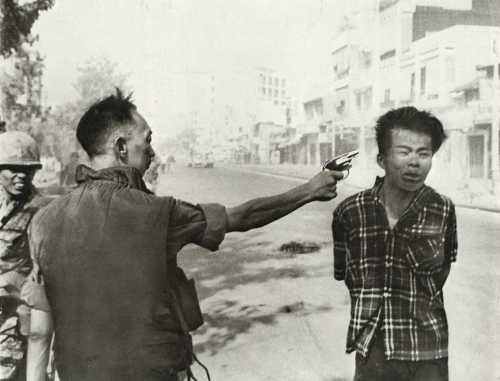
Michael somewhat convincingly argues that he knows what he’s doing and asserts that it is his job to “help the act” by serving them with the camera as the various band members do their various things rather than plunk the camera down and shoot their act in long shot. He says that plunking the camera down is what Warhol does.
Paul disagrees and in doing so makes Michael aware that he didn’t much care for The Stones’ Rock and Roll Circus or the Beatles’ own “Hey Jude” clip, both of which Michael directed. Paul goes on to predict that the film that Ringo is about to begin filming, The Magic Christian, won’t be any good. He’s mostly right about that one. This conversation goes on and on, nothing is ever really settled and the tapes get increasingly choppy excluding what might be large chunks of dialogue. At one point the tape cuts out and comes back in on Paul insisting that the TV special should have “camera movements the most fluid ever to be seen on TV, the most incredible camera movements. You had your lenses, your special lenses got from Japan, for really micro lenses and you had special and–and–the actual technical side of things is what we got into…obviously the answer is to do this thing I’m saying with great fluid movements in the desert, you know, and have all the cranes in the desert…Steadiness so it’s like a dream. You can shoot this thing like it’s a dream.”

At some point as the tape cuts in and out, it is established that John will arrive in an hour. Everyone present head over to a screening room on the lot to view rushes of the previous days’ filming. There is no audio of this and when the tape picks up again it is clear from the clatter of plates clanging against one another that the cameras have moved to the film studio’s cafeteria where the fabs, including a very vocal John and Yoko, are apparently eating lunch. On the first day of filming, Harrison was pretty insistent that cameras don’t film them eating so apparently they are taking advantage of his absence to capture a lunch break on film. Unfortunately the din of clanging china and silverware is such that most of what is said is unintelligible aside from a few tantalizing bits. The tape of this lunch lasts a half hour.
After lunch we finally get a bit of music. Rehearsals stick mostly to Paul’s “Get Back” but Lennon sneaks in a tiny bit of his “Dig a Pony.” “Get Back” began life during a jam session on the seventh and nearly every moment of its development can be heard on the bootlegs of these sessions. On this day, just before they begin playing the song Paul is heard instructing Mal to be at the ready with a pen and paper to transcribe any new lyrics that Paul might extemporize.

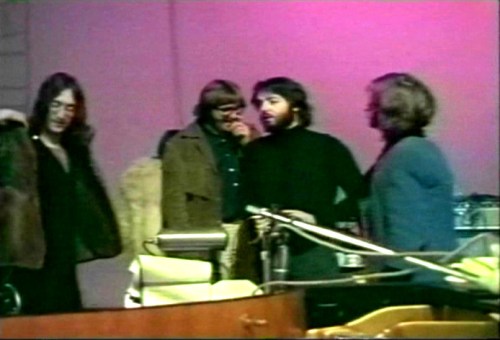
John and Paul play around a bit with the lyrics to “Get Back,” specifically trying to assign last names to the Loretta and Jojo (Jackson? Mary?) characters in the song and trying to make out what Jojo left his home in Arizona for (“looking for another blast,” “looking for a blast from the past,” “looking for the greener grass”).
After an hour of “Get Back” rehearsals that don’t yield any major breakthroughs, the threetles call it quits for the day. Before Paul leaves, Michael tries to nail down the schedule for the next week or so and Paul tells him to “stay flexible.” In order to guarantee to Michael that at least John and Paul will return the following day, they both agree to leave their instruments behind. I have no idea what John was playing that day but it might be safe to assume that he was on this beautiful thing:
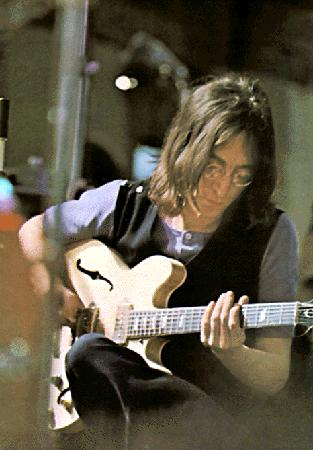
Meanwhile, Paul tells Michael, “What greater faith can a man have than to leave his list? ‘She’s A Woman,’ ‘If I Needed…’, ‘…Tripper,’ ‘Baby’s in…,’…’I Feel Fine,’ ‘Yesterday’ ‘I Wanna Be Nowhere Man,’ ‘Paperback Long and Tall,'” This list is the one affixed to Paul’s old touring bass, which had been taken out of mothballs for these sessions, and happens to be the set list of the fabs’ last concert, or their last concert until the 30th of January of 1969.

Posted in cinema, context, Macca, music, years after the event
 chained and perfumed