

John D. Isaacs, former chief engineer of the Southern Pacific railway, who devised the chronophotographic machines which made Muybridge famous.
John D. Isaacs, former chief engineer of the Southern Pacific railway, who devised the chronophotographic machines which made Muybridge famous.

Mary Miles Minter — she was Juliet Shelby then — when she made her first motion picture appearance under the belligerent banner of P.A. Powers. The picture was called The Nurse.

This is The Letter which started the screen career of the motion picture on Broadway, at the famous Koster & Bial’s Music Hall, where the Vitascope had its premiere a month later.

Mae Lucas — Now Mrs. B.L. Rhodes of Norfolk, Virginia — at left, and her dancing partner in the Gaiety Girls at Daly’s Theatre in New York in 1894, when Miss Lucas went to dance for the Edison Kinetoscope.
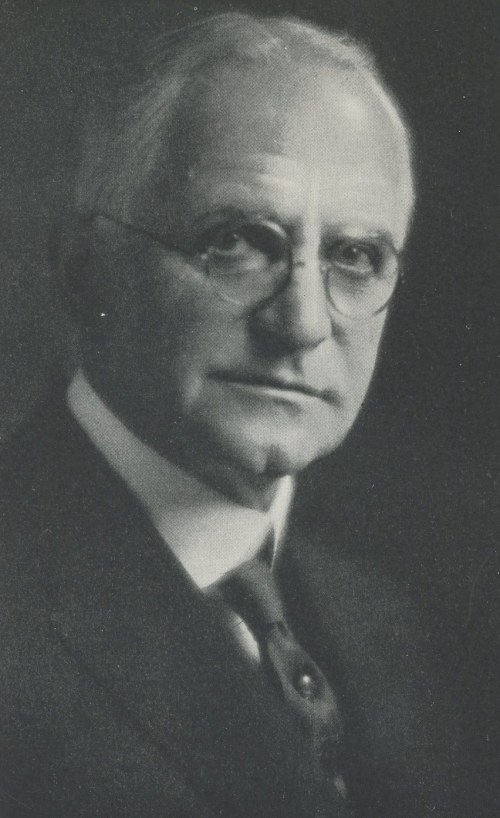
George Eastman, whose solution of the Kodak‘s problem of “roller photography” with film in 1889 produced the material which Edison needed for the motion picture.
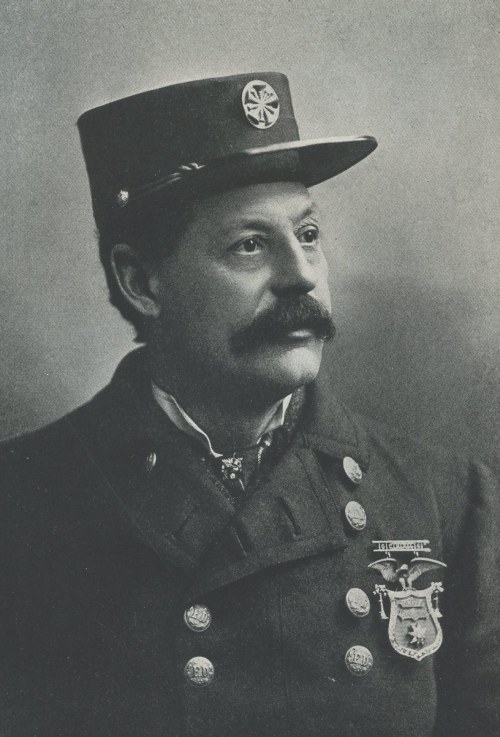
Chief George C. Hale of the Kansas City, Missouri, fire department, whose invention of the Hale’s Tours show device in 1903 made a film exhibitor of Carl Laemmle and opened careers for many another famous name of today.

George Kleine, the diplomat and peace-maker in the secret negotiations that ended the Biograph–Edison war and made the motion picture an industry.

The First “STILL” — one of a series of photographs made at Edison’s little New York studio in the Chelsea district about 1901, to illustrate a German newspaper correspondent’s feature story about the “new American art.” The production appears to have been a comedy.
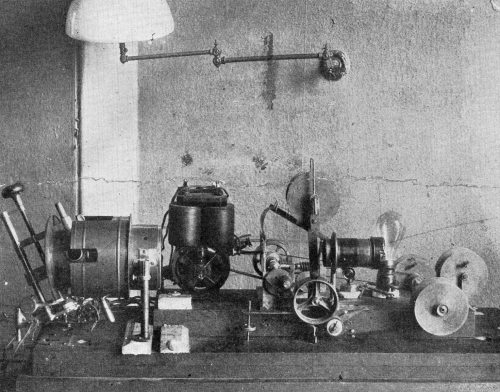
Thomas Armat‘s “beater” projector of 1895, the machine which established the essential principle, of a long period of rest and illumination in the intermittent film movement, on which all screen projection depends.

James J. Corbett and Peter Courtney, when they squared off before the Edison camera at West Orange in the first fight picture to reach the screen. 1894.
 chained and perfumed